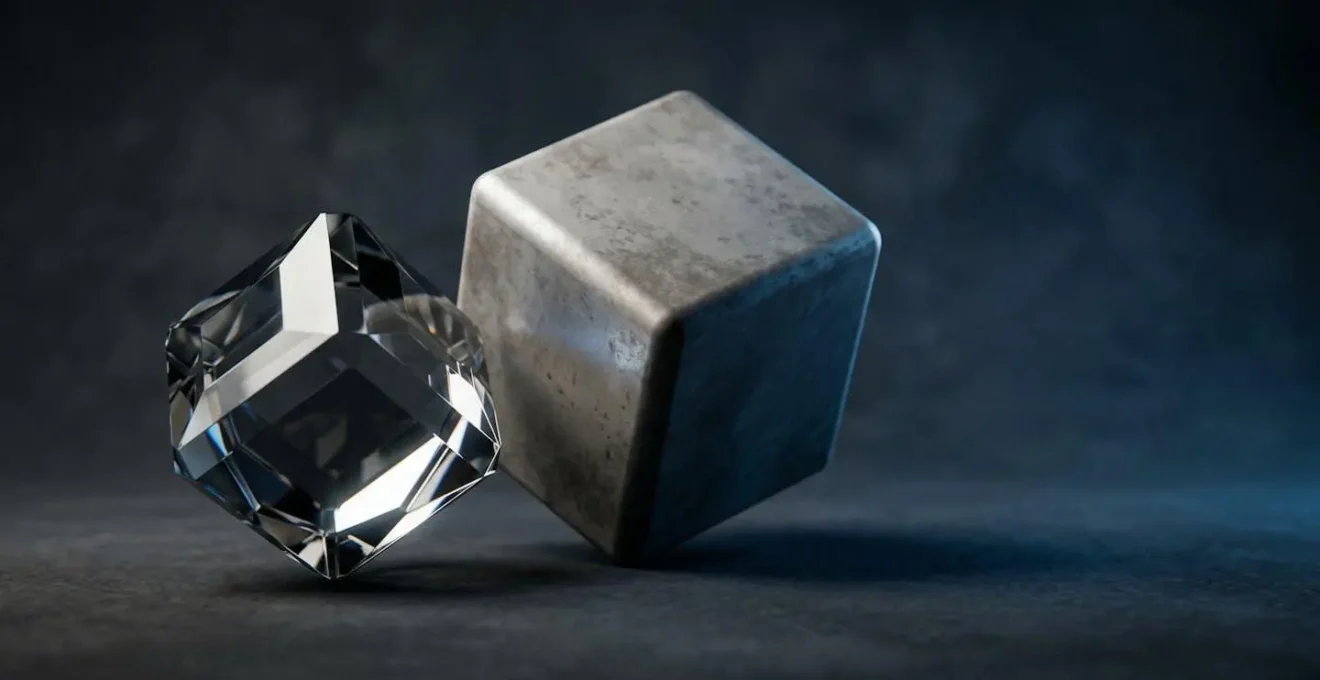
GaN’s superiority isn’t magic; it’s a direct result of its wide-bandgap physics, enabling higher switching frequencies that shrink components but create new, critical thermal challenges.
- Gallium Nitride (GaN) achieves higher efficiency, often reaching up to 95%, by minimizing energy loss as heat.
- This allows for significantly smaller passive components, like transformers, leading to chargers that are up to 40% more compact.
- However, this power density increases ‘heat flux,’ making sophisticated thermal management a crucial engineering trade-off.
Recommendation: For tech enthusiasts and professionals, switching to GaN is a logical step for performance and portability, but appreciating the engineering behind its thermal properties is key to understanding its true value.
The familiar heft of a traditional laptop brick or the tangle of slow, bulky chargers in a travel bag is a universal annoyance. For decades, silicon has been the bedrock of power electronics, a reliable but increasingly limited material. We’ve accepted its constraints as a simple fact of life. The conventional wisdom was that more power required more size and generated more heat, a trade-off that seemed unavoidable. This led to a gradual, incremental evolution in charger design, but never a true revolution.
But what if the key to unlocking the next generation of power delivery wasn’t about simply refining silicon, but replacing it entirely? This is where Gallium Nitride (GaN) enters the scene, not just as an alternative, but as a fundamental paradigm shift. GaN’s revolution isn’t just about making devices smaller; it’s a deep dive into power physics that redefines the engineering trade-offs between size, efficiency, and thermal management. It’s a material that operates on a different set of rules, allowing for designs that were previously thought impossible.
In this article, we will move beyond the marketing hype. As a power electronics engineer, I’ll guide you through the science that makes GaN so transformative. We will dissect why GaN chargers are smaller, how to interpret efficiency data like a pro, and confront the counter-intuitive risks that come with ultra-compact designs. We’ll also explore how this battle of materials is playing out in high-stakes applications like electric vehicles and what it means for the future of computing itself.
To fully grasp this technological leap, we’ll explore the core principles, practical applications, and future trajectory of these advanced materials. This guide breaks down everything you need to know, from the microscopic physics to the macro-economic trends.
Summary: The Semiconductor Showdown: GaN, Silicon, and the Future of Power
- Why GaN Chargers Are 40% Smaller Than Traditional Ones?
- How to Read Efficiency Curves on MOSFET Datasheets?
- The Heat Dissipation Risk in Ultra-Compact Power Supplies
- SiC vs GaN: Which Material Wins for Electric Vehicle Charging?
- When Will GaN Technology Be Cheap Enough for Budget Devices?
- Why Does Bitcoin Mining Use More Energy Than Argentina?
- Why Water Usage in Data Centers Is Causing Drought Concerns?
- ARM vs x86: Which Architecture Will Dominate the Future of Computing?
Why GaN Chargers Are 40% Smaller Than Traditional Ones?
The secret to GaN’s dramatic size reduction lies in a property known as its “wide bandgap.” In semiconductor physics, the bandgap is the energy required to excite an electron and allow it to conduct electricity. GaN has a much wider bandgap than silicon, which means it can handle higher voltages and temperatures before breaking down. This core advantage allows GaN transistors to switch on and off much, much faster than their silicon counterparts—often at frequencies three to ten times higher. This is not just an incremental improvement; it’s a game-changer for power supply design.
The switching frequency is the critical factor that dictates the size of passive components like transformers, inductors, and capacitors. In a power adapter, these components are responsible for converting and storing energy. The higher the frequency, the less time these components need to hold a charge in each cycle, meaning they can be physically smaller to do the same job. This principle is why market analysis confirms that GaN chargers can be up to 40% smaller than silicon-based chargers of the same power output. The size of the transformer, often the bulkiest part, can see a reduction of roughly 50% by leveraging GaN’s high-frequency properties.
This leap in power density is especially valuable in modern applications where space and efficiency are paramount. As researchers from MDPI note, “GaN enables a higher switching frequency and a much lower switching charge than Si/SiC, which is especially valuable at the AC–DC front end of the OBC [On-Board Charger], where grid power quality (PFC), efficiency, and power density are tightly constrained.” It’s not just about smaller phone chargers; it’s about enabling more compact and efficient power systems across the board.
Ultimately, the move to GaN is a strategic engineering decision to trade the mature, well-understood world of silicon for the high-frequency, high-density potential of a new material, fundamentally shrinking the form factor of power electronics.
How to Read Efficiency Curves on MOSFET Datasheets?
For an engineer, a datasheet is a treasure map, and the efficiency curve is the “X” that marks the spot for optimal performance. When comparing GaN and silicon MOSFETs (the fundamental switching transistors), the efficiency curve tells a compelling story. This graph typically plots efficiency (in percent) on the Y-axis against the output current or load (in amps or percent) on the X-axis. A perfect, lossless system would be a flat line at 100%. In reality, all power conversion involves losses, primarily as heat, and this curve shows exactly where those losses are most and least significant.
The visualization below illustrates the typical performance difference between a GaN and a silicon-based system. You can see how one material maintains higher efficiency across a wider range of operating conditions.
As the graph metaphorically shows, silicon-based systems often peak in efficiency at a specific, narrow load range (e.g., 50-70% load) and drop off significantly at very low or very high loads. In contrast, GaN’s lower on-resistance (Rds(on)) and reduced switching losses allow it to maintain a much flatter, higher curve across the entire load range. This is why GaN chargers can achieve up to 95% efficiency, compared to the 80-85% typical for legacy silicon designs. This means less energy is wasted as heat, which not only saves power but is also a critical factor in enabling compact designs.
Your Action Plan: Auditing a Datasheet for Real-World Efficiency
- Identify the Efficiency vs. Load Curve: Locate the graph in the datasheet. Check the test conditions (input voltage, frequency) as they heavily influence the results.
- Analyze the Peak and Flatness: Note the peak efficiency percentage and, more importantly, how quickly it drops off. A flatter curve indicates better performance across a wider range of real-world use cases (e.g., from a phone trickle-charging to a laptop at full power).
- Cross-reference with Rds(on): Find the “On-Resistance” (Rds(on)) value. A lower Rds(on) generally translates to lower conduction losses and higher efficiency, especially at heavy loads.
- Examine Switching Losses (Eon, Eoff): Look for switching energy figures. Lower values are crucial for high-frequency designs, as these losses occur every time the transistor switches. This is where GaN excels.
- Assess Thermal Resistance: Check the “Thermal Resistance” (Rth) value. A lower number means the device can more effectively transfer heat away from the semiconductor junction, which is vital for reliability.
Reading these curves isn’t just an academic exercise; it’s about predicting how a device will perform in the real world, where loads are rarely constant. GaN’s superior curve profile is a direct reflection of its more efficient underlying physics.
The Heat Dissipation Risk in Ultra-Compact Power Supplies
At first glance, it seems paradoxical. We’ve established that GaN is more efficient, meaning it wastes less energy as heat. So, it should run cooler, right? Yes, but that’s only half the story. The true engineering challenge isn’t the total amount of heat, but its concentration. This is the concept of heat flux—the amount of thermal energy passing through a given surface area. By dramatically shrinking the size of a power supply, we are concentrating that waste heat into a much smaller volume, creating intense hotspots that can be incredibly difficult to manage.
This is the counter-intuitive risk of GaN’s high power density. A traditional, bulky silicon charger has a large surface area to naturally dissipate its (greater) heat into the surrounding air. A tiny GaN charger has very little surface area, so even its (smaller) amount of heat can raise the internal temperature to critical levels. This creates a significant design challenge that can compromise performance and long-term reliability if not addressed properly.
While a GaN charger is more efficient and generates less total waste heat, that heat is concentrated in a significantly smaller volume. This dramatically increases the ‘heat flux’ (heat per unit area), making thermal management a critical design challenge.
– Thermal Management Research Team, A Review of Thermal Management Techniques Adopted for High-Power-Density GaN-Based Converters
Engineers combat this high heat flux with sophisticated thermal management strategies. This includes using high-conductivity potting compounds to pull heat away from the components, integrating copper or even graphene heat spreaders, and optimizing the physical layout of the circuit board to prevent hotspots. Advanced GaN generations (like GaN III) further tackle this by refining the semiconductor itself. For instance, some new designs prevent hotspots during fast charging, achieving a 40% heat dissipation reduction through lower on-resistance. The goal is no longer just electrical efficiency, but thermal efficiency as well.
Therefore, when you hold a tiny, powerful GaN charger that stays remarkably cool, you’re not just witnessing efficient electronics; you’re seeing the result of a masterclass in modern thermal management.
SiC vs GaN: Which Material Wins for Electric Vehicle Charging?
As we move from pocket-sized chargers to the high-power world of electric vehicles (EVs), the semiconductor debate intensifies. Here, GaN faces another wide-bandgap competitor: Silicon Carbide (SiC). Both materials vastly outperform silicon, but they have distinct strengths that make them suitable for different parts of the EV ecosystem. The choice between them isn’t about which is “better” overall, but which is the right tool for a specific job, particularly when it comes to voltage.
Silicon Carbide has established a strong foothold in the high-voltage heart of the EV: the main inverter, which converts DC power from the battery to AC power for the motor. SiC excels at handling extremely high voltages (800V and above) and high temperatures, making it ideal for the demanding environment of the drivetrain. This is why SiC inverters made up 28% of the BEV market in 2023, a figure that is rapidly growing, especially in premium vehicles that use 800V architectures for faster charging.
However, GaN is carving out its own crucial niche in other parts of the vehicle. As the Power Systems Design team highlights, the two materials serve different voltage classes:
While SiC devices have the upper hand in high-voltage applications, such as equipment connected to an 800 V bus in some high-end vehicles, GaN offers valuable advantages when applied to platforms operating with lower battery voltages up to about 400 V.
– Power Systems Design Editorial Team, The SiC Evolution and GaN Revolution for Electric Vehicles
This makes GaN the perfect candidate for on-board chargers (OBCs) in 400V vehicles and for DC-DC converters that power the car’s lower-voltage auxiliary systems (like infotainment and lighting). In these roles, GaN’s superior switching frequency allows for OBCs that are smaller, lighter, and more efficient, which in turn can slightly improve the vehicle’s overall range and reduce charging times. So, the winner isn’t one material, but the combination of both working in harmony.
The car of the near future will likely run on a powerful SiC inverter while being charged and managed by an efficient, compact GaN-based system—a true win-win for wide-bandgap semiconductors.
When Will GaN Technology Be Cheap Enough for Budget Devices?
The question of cost is central to any new technology’s journey from a niche, premium feature to a mainstream standard. For years, GaN was significantly more expensive to produce than silicon, relegating it to high-end accessories. However, that landscape is changing with breathtaking speed. The answer to “when will it be cheap enough?” is, in many ways, “now.” Recent breakthroughs in manufacturing and soaring production volumes have driven costs down dramatically.
In fact, some market analysis indicates that GaN has reached price parity with silicon in consumer power electronics for certain applications. This doesn’t mean every GaN charger is as cheap as the cheapest silicon one, but it means the “GaN premium” is rapidly vanishing. Manufacturers can now build GaN-based power supplies at a cost comparable to traditional silicon designs, while offering superior performance as a key differentiator.
This adoption curve follows a classic technology pattern, as one industry expert explained in an interview:
As GaN technology becomes more widely adopted, prices will naturally decrease, similar to what happened with BLDC motors used in fans. The key advantage of owning your design IP is the ability to balance cost and performance.
– Industry Expert Interview, GaN Adaptors Industry Analysis – Electronics For You
The market growth reflects this trend. The GaN charger market is no longer a small niche; it’s a booming industry. Predictions show the GaN Charger Market is predicted to grow from USD 1.10 billion in 2023 to USD 4.22 billion by 2030, with a CAGR of 19.9%. This explosive growth creates economies of scale, further driving down costs and accelerating a feedback loop of adoption. We are past the tipping point; GaN is no longer an exotic material but a competitive solution that will soon be the default choice for any application where power density and efficiency matter.
Within the next few years, expecting a high-performance charger to be GaN-based will be the norm, not the exception, even in budget-friendly devices.
Why Does Bitcoin Mining Use More Energy Than Argentina?
The staggering energy consumption of Bitcoin mining is not a flaw in the system, but a direct consequence of its core security mechanism: Proof-of-Work (PoW). At its heart, PoW is a competitive race. Miners around the world use specialized hardware to solve an incredibly complex mathematical puzzle. The first one to find the solution gets to add the next “block” of transactions to the blockchain and is rewarded with new bitcoin. This puzzle is designed to be difficult to solve but easy for others to verify.
The system’s “difficulty” automatically adjusts every two weeks to ensure that, on average, a new block is found every 10 minutes, regardless of how many miners are competing. This is the crucial point: as more miners join the network with more powerful hardware, the difficulty increases for everyone. This triggers an arms race. A simple CPU was sufficient in the early days, but the competition quickly escalated to GPUs, and now to highly specialized hardware called Application-Specific Integrated Circuits (ASICs), which are designed to do nothing but solve this one specific type of puzzle as efficiently as possible.
This constant, global competition is what consumes so much electricity. Millions of ASICs are running 24/7, all consuming power to perform trillions of calculations per second. The combined energy draw of this global infrastructure is what leads to comparisons with the total energy consumption of entire countries like Argentina. The energy isn’t “wasted” in the traditional sense; it’s the cost of securing the network. The immense computational power required makes it prohibitively expensive for any single entity to attack the network, thus providing its robust, decentralized security.
Ultimately, Bitcoin’s energy usage is a feature, not a bug—it is the physical manifestation of its digital security, paid for in megawatts.
Why Water Usage in Data Centers Is Causing Drought Concerns?
While we often think of the digital world as clean and ethereal, the physical infrastructure that powers it has a massive environmental footprint, and one of its most surprising resource demands is water. Data centers—the factories of the digital age—are packed with thousands of servers that generate an immense amount of heat. Managing this heat is a critical operational challenge, and water has become one of the most effective tools for the job.
The connection to drought concerns stems from the most common method of large-scale cooling: evaporative cooling. Many large data centers use cooling towers, which work much like the human body’s sweating mechanism. Hot water from the data center’s cooling loop is pumped to the top of the tower and sprayed down. As it falls, large fans draw air through the water, causing a portion of it to evaporate. This evaporation process absorbs a tremendous amount of heat, effectively cooling the remaining water, which is then recirculated to absorb more heat from the servers.
The problem is that the evaporated water is lost to the atmosphere. A single large data center can consume millions of gallons of water per day, putting a significant strain on local water supplies, especially in the arid regions where many data centers are built (often for access to cheap land and power). When these facilities are located in areas already experiencing water scarcity or drought, their consumption competes directly with the needs of agriculture and local communities, sparking serious environmental and social concerns. The pursuit of computational efficiency creates a direct demand for a precious natural resource.
As our reliance on data grows, so does the pressure on data center operators to innovate with more sustainable cooling solutions, such as closed-loop systems or direct liquid cooling, that can deliver the required performance without depleting local water resources.
Key Takeaways
- GaN’s core advantage stems from its wide-bandgap physics, enabling higher switching frequencies that are the direct cause of smaller, more efficient power supplies.
- The primary engineering trade-off with GaN’s high power density is not the total heat produced, but the increased ‘heat flux’ in a smaller volume, making thermal management paramount.
- The future of efficiency is multi-faceted, relying on both new materials like GaN and SiC for power electronics and new architectures like ARM for computational processing, all aimed at maximizing performance-per-watt.
ARM vs x86: Which Architecture Will Dominate the Future of Computing?
The battle between ARM and x86 is more than a competition between brands; it’s a clash of fundamental design philosophies that will define the future of efficiency in computing. For decades, the x86 architecture, led by Intel and AMD, has dominated the PC and server markets. It’s built on a Complex Instruction Set Computer (CISC) philosophy. CISC processors are designed to execute complex tasks in a single instruction, which historically provided strong performance but often at the cost of higher power consumption and heat output.
In the other corner is ARM, built on a Reduced Instruction Set Computer (RISC) philosophy. RISC processors break down complex tasks into multiple, simpler instructions that can be executed very quickly and efficiently. This approach was perfected for the mobile world, where battery life—and therefore power efficiency—is the most critical metric. The key goal for ARM has always been to maximize performance-per-watt. This focus on efficiency is precisely why ARM has become the undisputed king of smartphones and tablets.
The question of future dominance arises because the battlefield has changed. The priorities of the data center and even personal computing are shifting to align with ARM’s strengths. As energy costs soar and the physical limits of cooling are reached, performance-per-watt is becoming as important as raw performance. Companies like Apple, with its M-series chips, have proven that an ARM-based architecture can deliver jaw-dropping performance while consuming a fraction of the power of its x86 rivals. Similarly, cloud giants like Amazon and Google are developing their own ARM-based server chips to reduce the massive energy bills and thermal loads of their data centers.
While x86 is not going away, its undisputed reign is over. The future of computing will likely be a hybrid one, but the momentum is undeniably with ARM’s philosophy of efficiency. The architecture that powered the mobile revolution is now poised to redefine what’s possible in every corner of the computing world, from the laptop to the cloud.