High Tech News
Technology moves at a pace that can feel overwhelming. One moment, businesses are debating cloud migration strategies; the next, quantum computing threatens to upend encryption standards that have protected data for decades. For professionals, investors, and curious minds alike, staying informed about high tech developments is no longer optional—it’s essential for making sound decisions in an increasingly digital world.
This resource serves as your compass through the complex terrain of modern technology. From the ongoing struggles of digital transformation in small businesses to the environmental implications of cryptocurrency mining, from hardware engineering career paths to the ethics of autonomous vehicles, we explore the topics that matter most. Whether you’re a business leader evaluating emerging technologies, an engineer charting your career path, or simply someone who wants to understand the forces shaping our digital future, you’ll find the context and insights you need here.
Why Digital Transformation Continues to Challenge Businesses
Despite years of investment and countless success stories, digital transformation remains an elusive goal for many organizations. Studies consistently show that a significant majority of transformation initiatives fail to deliver their promised results. Understanding why this happens—and how to avoid common pitfalls—is crucial for any business navigating the digital landscape.
The Legacy System Trap
Many organizations operate on aging infrastructure that creates hidden security vulnerabilities. These legacy systems often contain gaps that malicious actors actively exploit. Modernizing these systems without disrupting daily operations requires careful planning, including step-by-step workflow digitization that maintains productivity throughout the transition.
The Shiny Object Syndrome
IT budgets frequently drain toward trendy technologies that never deliver meaningful returns. The temptation to adopt blockchain, AI, or IoT solutions without clear use cases leads to wasted resources. Successful technology adoption requires:
- Running pilot programs that generate actionable data before full-scale implementation
- Identifying the specific tipping point where emerging technology provides genuine utility
- Comparing options objectively—such as evaluating whether AI or IoT offers faster efficiency gains for specific manufacturing contexts
Choosing Sustainable Business Models
Beyond technology selection, businesses must also reconsider their commercial models. The ongoing debate between subscription-based services and one-time purchases reflects deeper questions about customer relationships, recurring revenue, and long-term value creation. Each approach suits different niches and customer expectations.
Hardware Engineering Careers in an AI-Dominated Era
As software continues to eat the world, aspiring engineers often wonder whether hardware engineering degrees remain valuable investments. The answer is nuanced and depends heavily on specialization, continuous learning, and strategic career planning.
Initial salary disparities between hardware and software engineers can reach approximately 20%, a gap that reflects market demand rather than skill value. However, hardware expertise becomes increasingly critical as technology advances—someone must design the chips that run AI models, the sensors that enable IoT, and the quantum processors that may revolutionize computing.
Skills That Future-Proof Your Career
Engineers who thrive long-term typically master specialized competencies that remain in demand:
- FPGA programming skills significantly boost employability in defense, telecommunications, and data center applications
- Understanding both analog and digital design provides versatility, though each path offers different job security profiles
- Documenting hobby projects professionally helps impress recruiters and demonstrates hands-on experience
Perhaps most concerning is the skill gap that can leave senior engineers struggling with employment after age fifty. Continuous learning and adaptability aren’t just buzzwords—they’re survival strategies in an industry where yesterday’s expertise can become tomorrow’s obsolescence.
Supply Chain Realities and Manufacturing Shifts
The global technology supply chain has experienced unprecedented disruption in recent years. PCB (printed circuit board) supply chains exemplify the challenges facing hardware manufacturers, with lead times sometimes exceeding fifty weeks and forcing companies to develop sophisticated demand forecasting strategies.
The Geography of Manufacturing
Western companies increasingly evaluate alternative sourcing strategies, comparing suppliers in China and Taiwan while weighing political stability, logistics costs, and quality control capabilities. The anticipated shift of manufacturing capacity to Vietnam has progressed more slowly than many predicted, constrained by infrastructure development and workforce training needs.
Protecting Margins in Volatile Markets
Procurement professionals face critical timing decisions, particularly regarding commodity materials. Knowing when to lock in copper prices can significantly protect PCB margins, while quality control mistakes when onboarding new suppliers can ruin entire production batches. These operational details often determine whether companies survive supply chain turbulence.
Quantum Computing: Preparing for a Post-Quantum World
Quantum computing represents perhaps the most profound technological shift on the horizon. Unlike classical computers that process binary bits, quantum computers leverage qubits that can exist in multiple states simultaneously, fundamentally changing the rules of computational power.
The security implications are staggering. Current encryption standards that protect financial transactions, government communications, and personal data will eventually fall to sufficiently powerful quantum computers. Security experts increasingly discuss Y2Q—the so-called quantum apocalypse countdown—when existing cryptographic protections become obsolete.
Taking Action Now
Organizations cannot afford to wait for quantum computers to mature before responding. Sophisticated attackers already harvest encrypted data today, planning to decrypt it once quantum capabilities emerge. Preparing infrastructure for post-quantum cryptography involves:
- Auditing current encryption implementations across all systems
- Identifying data with long-term sensitivity requirements
- Developing migration plans toward quantum-resistant algorithms
- Monitoring standards bodies for emerging post-quantum cryptographic standards
Meanwhile, classical supercomputers and quantum systems each offer advantages for specific applications like drug discovery, making technology selection highly context-dependent.
Technology’s Growing Environmental Footprint
The environmental impact of technology has emerged as a critical concern spanning multiple sectors. From e-waste management to cryptocurrency energy consumption, the industry faces mounting pressure to address its ecological responsibilities.
The E-Waste Crisis
Only approximately 17% of global e-waste actually gets recycled, while carbon-neutral tech claims often amount to greenwashing. Consumers seeking genuinely sustainable options must learn to evaluate brand claims critically, understanding that even trusted labels like Energy Star don’t necessarily guarantee minimal energy consumption. Practical choices—such as whether aluminum or plastic laptop chassis are better for the planet—involve complex lifecycle analyses that rarely have simple answers.
Data Centers and Cloud Storage
Cloud storage carries a carbon footprint that rivals aviation, while data center water usage raises drought concerns in regions worldwide. Location matters enormously—facilities in Iceland leverage geothermal energy and natural cooling, while those in Virginia rely more heavily on conventional power sources. Even personal habits like keeping old emails indefinitely contribute to collective environmental impact, and virtualization technologies help run more applications on fewer physical servers.
Cryptocurrency’s Energy Debate
The proof-of-work versus proof-of-stake debate extends beyond technical efficiency to fundamental questions about blockchain sustainability. Bitcoin mining alone consumes more energy than some nations, prompting regulatory scrutiny and potential bans in various jurisdictions. Innovations like Layer 2 solutions reduce per-transaction carbon footprints, while some operators experiment with using flared gas to power mining operations.
Autonomous Vehicles and Connectivity Infrastructure
Self-driving cars present unique challenges that extend far beyond engineering. When an autonomous vehicle must choose between collision outcomes, liability questions become profoundly complex. Programming ethics into cars has proven impossible to standardize across cultures and legal systems, while accessing black box data after crashes involves technical and legal hurdles.
Security researchers have demonstrated vulnerabilities like laser tricks that can confuse self-driving systems into emergency stops, raising questions about readiness for widespread deployment. Full Level 5 autonomy—where vehicles handle all driving scenarios without human intervention—remains years away despite optimistic predictions.
Home Connectivity Choices
For remote workers, choosing between fiber optics and 5G home internet involves understanding tradeoffs in reliability, latency, and availability. Fast download speeds alone don’t fix video conferencing lag—latency and jitter matter more for real-time applications. Weather phenomena like rain fade can degrade 5G signals during storms, while mesh Wi-Fi systems and range extenders offer different approaches to solving coverage dead zones. Rural areas continue waiting for fiber infrastructure expansion that frequently falls behind schedule.
The technology landscape continues evolving rapidly, creating both opportunities and challenges for businesses, professionals, and consumers. By understanding these interconnected trends—from digital transformation and quantum computing to sustainability and infrastructure—readers can make more informed decisions about the technologies that increasingly shape daily life. Each topic explored here connects to deeper analyses that examine specific questions, strategies, and implications in greater detail.

Fiber Optics vs 5G Home Internet: Which Is More Feliable for WFH?
For remote work, connection stability trumps raw speed, and the engineering differences between Fiber and 5G directly impact your daily productivity. Fiber provides superior reliability due to its physical immunity to weather, offering consistently low latency and symmetrical speeds crucial…
Lire la suite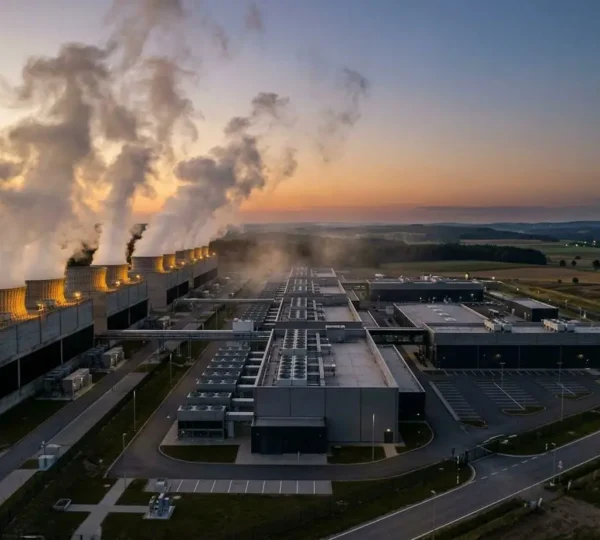
Why Your Cloud Storage Has a Carbon Footprint Larger Than Aviation?
Contrary to its ethereal image, the ‘cloud’ is a massive, physical industry whose environmental impact—particularly in water consumption—is dangerously underestimated. Data centers consume vast quantities of freshwater for cooling, with AI training alone requiring hundreds of thousands of liters for…
Lire la suite
Who Is Liable When a Self-Driving Car Chooses to Crash?
The debate over autonomous vehicle liability isn’t about solving the Trolley Problem; it’s about confronting the hidden vulnerabilities in the technology itself. Algorithmic bias, external sensor manipulation, and opaque data ownership are the true legal and financial battlegrounds defining fault….
Lire la suite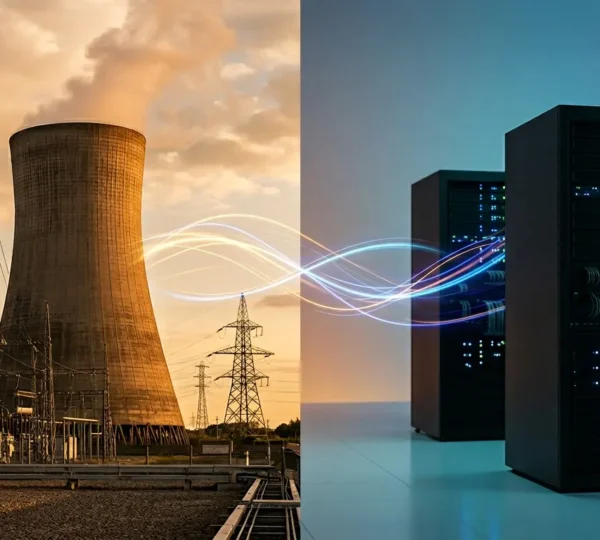
Proof of Work vs. Proof of Stake: A Data-Driven ESG Analysis of Crypto Sustainability
The debate over crypto’s sustainability is not a simple choice between the energy-intensive Proof of Work and the efficient Proof of Stake; it’s an assessment of operational realities and systemic risks. Proof of Work’s high energy consumption is a deliberate…
Lire la suite
Why Carbon-Neutral Tech Claims Are Often Greenwashing?
Most corporate « carbon-neutral » claims are not genuine environmental achievements but sophisticated accounting exercises designed to mislead. Genuine sustainability is proven by reducing direct emissions (Scope 1, 2, and 3), not just by purchasing controversial carbon offsets. Labels like Energy Star…
Lire la suite
When Will Quantum Computers Break Current Encryption Standards?
The quantum decryption threat is not a future event; it’s a current data liability crisis. Adversaries are actively exploiting the « Harvest Now, Decrypt Later » (HNDL) strategy to stockpile today’s encrypted data for future decryption. The true countdown clock is the…
Lire la suite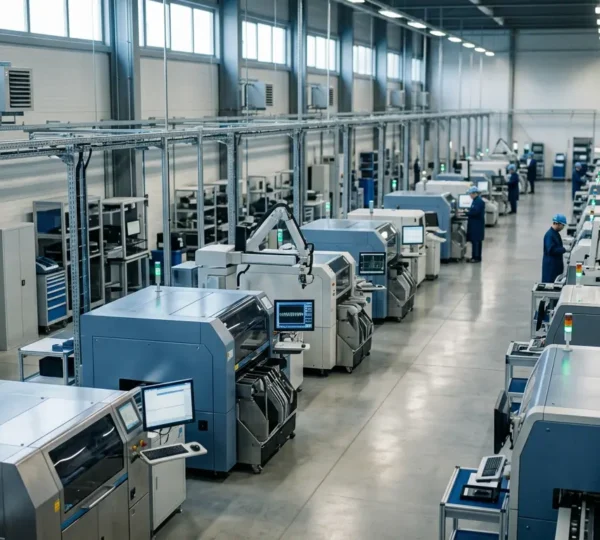
Will the PCB Supply Chain Stabilize? A Hard-Nosed Forecast for Procurement Leaders
The widespread expectation that the Printed Circuit Board (PCB) supply chain will « stabilize » or return to pre-pandemic norms is a dangerous illusion for any business planning for the next 18-24 months. Systemic volatility, driven by material competition, geopolitical tensions, and…
Lire la suite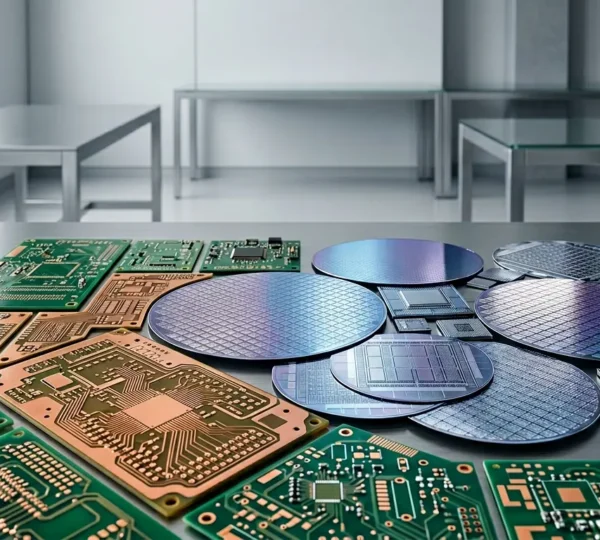
Is a Hardware Engineering Degree Still Worth It in the Age of AI?
A hardware engineering degree is not becoming obsolete; it’s evolving into a premium skillset focused on irreplaceable physical-world problem-solving. AI struggles with the nuance of analog complexity and the strict verification required for safety-critical hardware. A massive, looming talent shortage…
Lire la suite
Which Emerging Tech Should SMEs Invest In to Survive the Next Decade?
The greatest risk in tech investment isn’t choosing the wrong technology; it’s adopting it with the wrong process. Over 70% of digital transformations fail, not because of the tech itself, but due to a lack of strategic alignment and poor…
Lire la suite
Why Is Digital Transformation Failing for 70% of Small Businesses?
The 70% failure rate isn’t about choosing the wrong software; it’s about being bled dry by hidden « friction taxes »—the unmeasured costs of operational inefficiency. Legacy systems and manual processes create significant operational drag, costing leadership time and driving away top…
Lire la suite