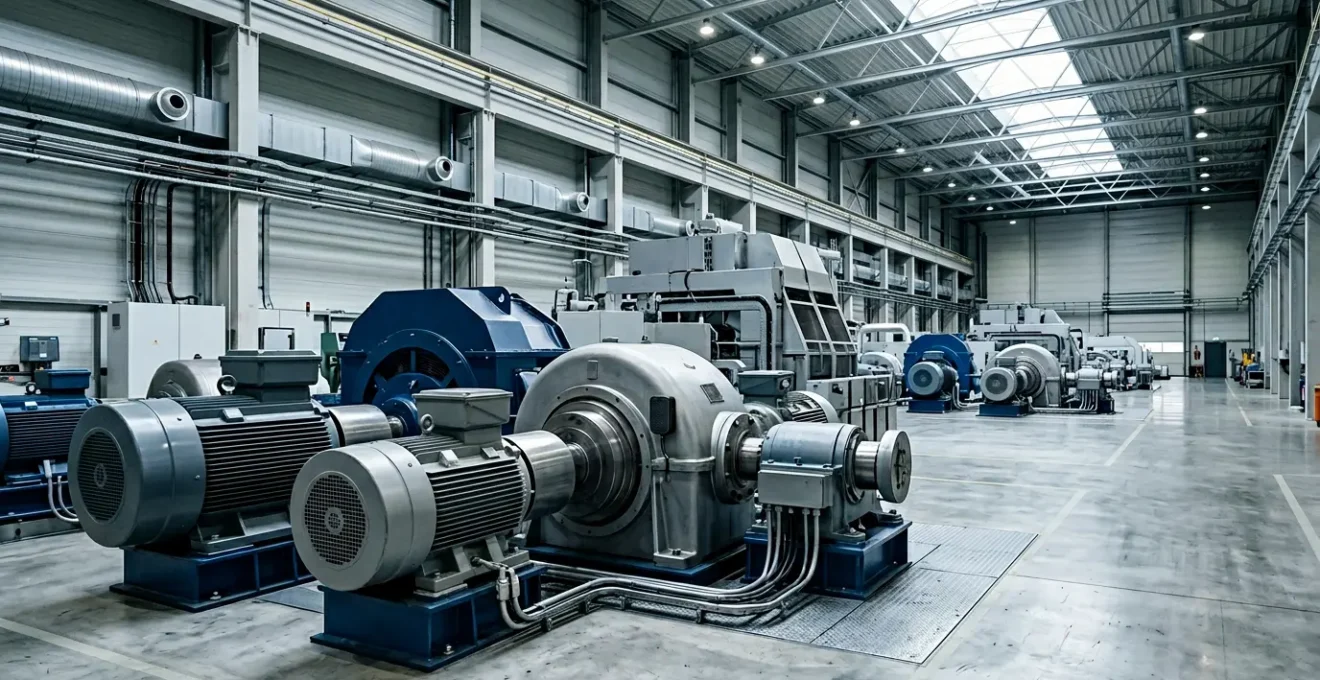
The true ROI of predictive maintenance is not in the algorithm itself, but in mastering the operational details of its implementation.
- Effective models rely on high-quality, accurately labeled historical data—a process that requires direct engineering expertise.
- Managing “alert fatigue” by fine-tuning model sensitivity is more critical to success than achieving 99% theoretical accuracy.
Recommendation: Instead of a full-scale deployment, start with a pilot project on a single critical asset to establish a clear breakeven point and prove the business case internally.
For any plant manager or reliability engineer, unscheduled downtime is the primary enemy. It destroys production schedules, inflates labor costs, and erodes profitability. The conventional approach has been a calendar-based preventive maintenance schedule, a strategy that often results in replacing components that still have significant operational life left or, worse, failing to catch a component that breaks down ahead of schedule. The promise of machine learning (ML) and Artificial Intelligence (AI) is to shift this paradigm from a probabilistic to a deterministic model.
Many discussions about predictive maintenance (PdM) remain high-level, focusing on the generic benefits of cost savings without addressing the practical, in-the-weeds challenges that determine a project’s success or failure. The conversation often stops at “collect sensor data,” but the real work—and the real value—lies in what happens next. It’s about translating raw data streams into actionable, reliable intelligence that a maintenance team can trust. The goal is not just to generate an alert, but to generate the *right* alert at the right time, with enough lead time to act efficiently.
This guide moves beyond the hype. We will dissect the operational realities of deploying a successful PdM program, focusing on the levers that directly impact your return on investment. The key isn’t simply buying an AI platform; it’s about building a system of reliability. We will explore why vibration analysis is the cornerstone of early detection, how to structure data labeling for maximum model accuracy, and the critical importance of solving the “over-sensitivity” problem that can doom a project before it starts. This is a blueprint for making predictive maintenance pay for itself, turning it from a technological curiosity into a core pillar of your operational strategy.
This article breaks down the essential components for building a predictive maintenance system that delivers tangible ROI. Explore the sections below to understand the key technical and financial considerations for your facility.
Summary: How to Build a Predictive Maintenance Program That Delivers ROI
- Why Vibration Analysis Is the Key to Early Failure Detection?
- How to Label Historical Data to Train Your Maintenance AI?
- The “Over-Sensitivity” Problem That Wastes Maintenance Teams’ Time
- Cloud vs Edge AI: Which Is Cheaper for Factory Monitoring?
- When Does Predictive Maintenance Pay for Itself?
- AI vs IoT: Which Offers Faster Efficiency Gains for Manufacturing?
- Why Drones Are 60% Cheaper Than Vans for Last-Mile Delivery?
- AGVs vs AMRs: Which Robot Is Best for Dynamic Warehouse Environments?
Why Vibration Analysis Is the Key to Early Failure Detection?
While temperature, pressure, and acoustic data are valuable, vibration analysis remains the single most effective method for detecting incipient mechanical failures in rotating equipment. It acts as a high-fidelity stethoscope for machinery, capable of identifying the subtle signatures of imbalance, misalignment, bearing wear, and gear-tooth defects long before they become catastrophic. The reason for its effectiveness lies in physics: every mechanical fault generates a unique energy pattern. As I-care Condition Monitoring Experts note, this is the foundational principle of the entire practice.
Vibration Analysis detects a wide range of mechanical anomalies that threaten equipment health and overall operational performance. Each fault mode generates a distinct vibration pattern, often visible as dominant peaks, harmonic series, or sidebands in the spectrum.
– I-care Condition Monitoring Experts, What is Vibration Analysis in Predictive Maintenance?
Machine learning models excel at parsing these complex spectral patterns, which are often invisible to the human eye amidst operational noise. Modern hybrid models can achieve remarkable precision. For example, a 2025 study demonstrated that a hybrid LSTM-GRU model could reach an 80% overall accuracy with fault identification in 15 minutes of data processing. This speed and accuracy translate directly into operational and financial gains. Automotive plants using this approach on robotic arms have reported maintenance cost reductions of 20-30%, while in the airline industry, vibration analysis has helped cut unscheduled engine removals by approximately 40%. The data is clear: vibration provides the richest, most actionable signal for early failure prediction.
How to Label Historical Data to Train Your Maintenance AI?
A machine learning model is only as good as the data it’s trained on. For predictive maintenance, this means creating a dataset where sensor readings are accurately labeled with their corresponding operational states: ‘healthy,’ ‘incipient failure,’ ‘bearing wear,’ ‘imminent failure,’ etc. This process of creating “ground truth” is the most critical and labor-intensive part of deploying a custom PdM solution. It cannot be fully automated; it requires the domain expertise of seasoned reliability engineers and maintenance technicians who can interpret historical work orders, failure reports, and operational logs to correctly classify past data.
The process begins with data aggregation—collecting synchronized time-series data from vibration, temperature, and current sensors, and aligning it with maintenance records. For example, if a motor failed on July 15th due to a bearing issue, the data from the preceding weeks and months becomes the training set for that failure mode. An engineer must then label the data, marking the point where the initial anomaly appeared. This requires a deep understanding of the equipment and its failure patterns. While tedious, this process is what gives the model its predictive power.
The value of accurately labeled data extends beyond maintenance. In manufacturing, Andrew Ng’s Landing AI developed a visual inspection system for Samsung trained on labeled images of product defects. The result was a 28% reduction in defect rates. The principle is the same: expert-labeled data teaches the AI to recognize patterns—whether visual defects or vibrational anomalies—with superhuman consistency. For plant managers, investing engineering time in data labeling is not a cost center; it’s a direct investment in the future accuracy and reliability of the entire predictive maintenance program.
The “Over-Sensitivity” Problem That Wastes Maintenance Teams’ Time
One of the fastest ways to kill a predictive maintenance initiative is to overwhelm the maintenance team with false alarms. When a model is too sensitive, it flags minor, transient deviations as potential failures, leading technicians on costly and time-consuming wild goose chases. This quickly erodes trust in the system. As the team at Reliamag points out, this creates a dangerous phenomenon known as alert fatigue. Once technicians begin to reflexively dismiss alerts as “just another false positive,” a genuine, critical warning can be easily missed, leading to the very catastrophic failure the system was designed to prevent.
The core challenge is finding the optimal balance between sensitivity (recall) and precision—the signal-to-noise ratio. A model that catches every potential failure but generates 90% false alarms is operationally useless. The goal is to tune the system to a point where it flags only statistically significant and persistent anomalies that correlate strongly with known failure modes. This requires a sophisticated approach that goes beyond simple thresholds. Research into advanced ML frameworks has shown this is achievable; for instance, the TEQ framework demonstrated the ability to achieve a 54% false positive suppression with a 95.1% detection rate. This level of precision is what makes a PdM system a reliable tool rather than a source of frustration.
Effectively managing model sensitivity is not a one-time setup. It’s an iterative process of refinement based on feedback from the maintenance team and ongoing analysis of alert accuracy. Treating alert accuracy as a key performance indicator (KPI) is essential for long-term success.
Action Plan: 5 Strategies to Reduce Predictive Maintenance False Positives
- Cross-Verify with Multiple Sensor Types: Confirm anomalies by correlating data from different sources, such as vibration, ultrasound, and oil analysis, to filter out single-sensor false positives.
- Implement Adaptive Thresholds: Use dynamic alarm limits that automatically adjust based on process changes (e.g., load, speed, temperature) to dramatically reduce false triggers during non-standard operations.
- Regularly Retrain AI/ML Models: Continuously update and retrain predictive models with new failure data and technician feedback to ensure they evolve as equipment ages and operating conditions change.
- Integrate Process Data for Context: Enhance raw condition data with contextual inputs like production load, ambient temperature, and duty cycle. This transforms raw sensor readings into actionable, context-aware intelligence.
- Establish an Alarm Accuracy KPI: Track the ratio of true positive alarms to false alarms on a monthly basis. Treat this metric as a critical reliability indicator to drive continuous improvement of the model.
Cloud vs Edge AI: Which Is Cheaper for Factory Monitoring?
When designing a predictive maintenance architecture, a critical decision is where to run the AI models: in the cloud or at the “edge” on devices located directly on the factory floor. This choice has significant implications for cost, performance, and security, framing a classic CapEx vs. OpEx trade-off. There is no single “cheaper” option; the right choice depends entirely on the specific application’s requirements.
A cloud-based approach is primarily an operational expenditure (OpEx). You pay a recurring subscription fee for data storage and processing on platforms like AWS, Azure, or Google Cloud. The advantages are immense scalability and access to virtually limitless computing power, allowing for the training of highly complex models on massive historical datasets. However, it requires a robust and reliable network connection to constantly stream large volumes of sensor data. The associated data transmission costs can become substantial, and the latency involved in a round trip to the cloud may be too high for applications requiring near-real-time responses.
Conversely, an edge AI approach is primarily a capital expenditure (CapEx). It involves investing upfront in powerful local hardware—industrial PCs or specialized AI accelerators—to perform data analysis directly on or near the equipment. The primary benefit is extremely low latency, making it ideal for high-speed machinery or critical safety systems. It also enhances data security and privacy by keeping sensitive operational data within the factory walls. Furthermore, it can continue to operate even if the external network connection is lost. The downside is a higher initial cost and a more complex management and deployment process for updating models across numerous distributed devices.
When Does Predictive Maintenance Pay for Itself?
The ultimate measure of a predictive maintenance program is its return on investment (ROI). The breakeven point is reached when the accumulated savings from avoided downtime and reduced maintenance costs exceed the total investment in sensors, software, and implementation. For many critical assets, this payback period is surprisingly short. The key is moving from unplanned, reactive repairs—which are exponentially more expensive—to planned, proactive interventions. As Oracle’s Supply Chain Management team highlights, the lead time provided by AI is a direct cost-saver.
Workers get maintenance warnings at least two weeks in advance, for example, on saw motors that underperform because of loose components. During each event, the company thus avoids 12 hours of unexpected downtime.
– Oracle Supply Chain Management, Using AI in Predictive Maintenance: What You Need to Know
The cost difference between a planned repair and an emergency failure is staggering. This is where the ROI becomes undeniably clear. A well-documented case study provides a powerful example of this financial leverage.
Case Study: Bearing Failure Prediction Saves Over $180,000
A machine learning model monitoring a critical bearing detected a spectral anomaly 34 days before it would have failed. The AI correlated this vibration signature with a minor 0.2°C temperature rise and a 1.1% increase in motor current, automatically generating a predictive work order. The subsequent planned repair during a scheduled shutdown cost $4,800. According to an analysis from OxMaint on ML failure prediction, the alternative—an emergency replacement after catastrophic failure—would have cost an estimated $186,000, a figure that includes lost production, overtime labor, and expedited shipping for replacement parts. The predictive alert generated a net saving of $181,200 from a single event.
This level of impact is not an outlier. A comprehensive study by Deloitte on predictive maintenance found that successful programs can lead to a 70% reduction in breakdowns, a 25% increase in productivity, and 25% lower overall maintenance costs. The business case is not a matter of *if* PdM pays for itself, but a matter of identifying the critical assets where it will deliver the fastest and most substantial return.
AI vs IoT: Which Offers Faster Efficiency Gains for Manufacturing?
Posing AI against the Internet of Things (IoT) is a false dichotomy; they are not competitors but powerful partners in a symbiotic relationship. One cannot function effectively without the other in a modern industrial setting. Thinking of them as separate paths to efficiency misses the point. The question is not which one is better, but how to leverage them together to achieve results.
IoT is the nervous system of the factory. It is the network of sensors, gateways, and connectivity that collects the raw data—the vibration, temperature, pressure, and current readings from every critical asset. By itself, this firehose of data can be overwhelming and of limited value. It can tell you what is happening *right now*, but it cannot reliably tell you what is going to happen next week. The immediate gain from IoT alone is improved real-time monitoring, which is a step up from manual checks, but it is not truly predictive.
AI is the brain that makes sense of that data. Machine learning algorithms are the engines that analyze the vast datasets collected by IoT sensors, identifying complex patterns, subtle correlations, and faint anomalies that are impossible for a human to detect. The “faster efficiency gains” come from this AI layer. The AI is what transforms raw data into actionable insight, such as a high-confidence prediction of a bearing failure in 30 to 90 days. As the OxMaint Research Team aptly puts it, AI is a force multiplier for human expertise.
Machine learning does not replace maintenance technicians. It replaces the impossible expectation that humans can detect failure patterns hidden in multi-dimensional sensor data across hundreds of assets simultaneously.
– OxMaint Research Team, Machine Learning for Equipment Failure Prediction: A Practical Guide
Therefore, while deploying an IoT network is the foundational first step, the truly transformative efficiency gains—the ones that fundamentally change how maintenance is scheduled and executed—are unlocked by applying AI. The fastest path to a high-ROI smart factory is to deploy an IoT network with a clear strategy for how AI will be used to analyze its data from day one.
Why Drones Are 60% Cheaper Than Vans for Last-Mile Delivery?
While seemingly disconnected from factory maintenance, the principles of optimizing logistics with technology share the same goal: boosting efficiency and reducing operational costs. In the realm of last-mile delivery—the final and most expensive leg of the supply chain—unmanned aerial vehicles (drones) are emerging as a disruptive alternative to traditional delivery vans, offering significant cost advantages driven by a few key factors.
The primary cost saving comes from a drastic reduction in both labor and fuel expenses. A single drone operator, managing a fleet of autonomous drones from a central hub, can accomplish the work of multiple drivers. This dramatically lowers the cost-per-delivery on the labor side. Furthermore, electric drones consume a fraction of the energy required to power a gasoline or diesel van, and they are immune to volatile fuel prices. The cost of electricity to charge a drone battery is negligible compared to filling a van’s fuel tank.
Secondly, drones operate “as the crow flies,” taking the most direct route possible from the distribution center to the customer’s location. They are not constrained by road networks, traffic congestion, traffic lights, or other ground-level delays. This leads to significantly faster delivery times and a higher number of deliveries possible within a given time frame. This increase in operational tempo further drives down the cost per package delivered. While regulatory hurdles and payload limitations still exist, for lightweight, high-priority packages in suburban and rural areas, the economic case is compelling, with studies pointing to cost reductions of up to 60% compared to van-based delivery.
Key Takeaways
- Predictive Maintenance ROI is driven by operational execution, not just the algorithm. Focus on data quality and managing false alarms.
- Vibration analysis is the most potent data source for early detection of mechanical failures in rotating equipment.
- The cost difference between a planned repair (alerted by AI) and an emergency failure is the most compelling argument for a PdM program.
AGVs vs AMRs: Which Robot Is Best for Dynamic Warehouse Environments?
As factories and warehouses become smarter, automation extends beyond monitoring equipment to handling materials. The choice between Automated Guided Vehicles (AGVs) and Autonomous Mobile Robots (AMRs) is a critical decision in this domain, directly impacting operational flexibility and efficiency. While both move materials without human intervention, they operate on fundamentally different principles, making one far better suited for dynamic environments.
AGVs are the workhorses of predictable, high-volume operations. They navigate by following fixed, pre-defined paths, such as magnetic stripes on the floor or laser-guided routes. Their strength lies in their reliability and speed in structured environments where the tasks are repetitive and the layout is static. However, they are inflexible. If an obstacle blocks their path, an AGV will simply stop and wait, causing a bottleneck. Rerouting an AGV requires physically altering its guide path, a time-consuming and costly process.
AMRs, in contrast, are designed for adaptability. They are the intelligent evolution of AGVs. Using advanced technologies like LiDAR, 3D cameras, and AI-powered navigation software (similar to self-driving cars), AMRs create a map of their environment and can dynamically navigate the most efficient path to their destination. If an obstacle—like a misplaced pallet or a group of workers—appears, the AMR will safely and instantly calculate an alternate route. This makes them ideal for the chaotic and constantly changing reality of a modern warehouse or factory floor. While they often represent a higher initial investment, their flexibility and intelligence deliver a superior ROI in environments where agility is paramount.
For a plant manager or reliability engineer, the journey into advanced automation—whether through predictive maintenance or mobile robotics—begins with a clear-eyed assessment of the technology’s practical application and a focus on measurable ROI. To determine the best starting point for your facility, evaluate your most critical assets and identify where unplanned downtime creates the most significant financial pain. A successful pilot project in that area will build the momentum and the business case for broader adoption.