A hardware engineering degree is not becoming obsolete; it’s evolving into a premium skillset focused on irreplaceable physical-world problem-solving.
- AI struggles with the nuance of analog complexity and the strict verification required for safety-critical hardware.
- A massive, looming talent shortage is creating unprecedented demand and job security for skilled engineers who can bridge silicon and systems.
Recommendation: Focus on developing skills at the intersection of hardware and systems—like FPGA programming and analog design—to build a defensible, high-value career.
If you’re considering a degree in hardware engineering, you’ve likely been confronted with a wave of doubt. You hear whispers that software is the only path to a high salary, or that generative AI will soon automate chip design, rendering your hard-earned degree useless. It’s a daunting narrative, especially when you see AI generating code, images, and text with startling proficiency. The question isn’t just valid; it’s essential: are you about to invest years of your life into a dying field?
The common advice is to simply “keep learning” or accept that hardware is a stable but less lucrative cousin to the fast-paced world of software. Many will point to the initial salary gap as definitive proof. But this view is dangerously simplistic. It overlooks the fundamental nature of hardware engineering and misinterprets AI’s role in the industry. The real conversation isn’t about replacement; it’s about augmentation and specialization.
This is where we need to shift the perspective. The true value of a hardware degree in the age of AI isn’t about competing with software developers on their terms. It’s about cultivating a deep expertise in physical-world problem-solving—the art and science of making electronics work reliably under the constraints of physics, power, and materials. This is a domain where intuition, hands-on debugging, and system-level understanding are paramount, creating a moat that AI, in its current form, cannot easily cross.
This article will deconstruct the myths surrounding a hardware career. We will analyze the initial salary disparity, explore the high-demand specializations that offer immense job security, and provide a clear roadmap for how to position yourself not as a victim of AI, but as an indispensable engineer augmented by it. We will show you why the future of hardware isn’t shrinking; it’s sharpening.
To navigate this complex landscape, this guide is structured to address your key concerns directly and provide actionable insights for your career path. The following sections will break down everything from salary realities to the specific skills that will make you invaluable in the modern tech industry.
Summary: Navigating Your Hardware Career in the AI-Driven Tech Landscape
- Why Hardware Engineers Earn 20% Less Than Software Devs Initially?
- How to Learn FPGA Programming to Boost Your Employability?
- Analog vs Digital Design: Which Path Has More Job Security?
- The Skill Gap That Leaves Senior Engineers Unemployable After 50
- How to Document Hobby Projects to Impress Top Tech Recruiters?
- Why Using AI-Generated Images Can Get Your Business Sued?
- Why Warehouses Can’t Find Workers Even with Higher Wages?
- Will Generative AI Replace Graphic Designers by 2026?
Why Hardware Engineers Earn 20% Less Than Software Devs Initially?
The salary gap between junior hardware and software engineers is often the first and most discouraging statistic prospective students encounter. It’s a real phenomenon, but it stems from fundamental differences in market dynamics, not a lesser value of the work. Software, particularly in web and mobile applications, can be developed and deployed rapidly with low marginal cost. A successful app can scale to millions of users almost overnight, generating massive revenue and justifying higher initial salaries to attract talent in a fiercely competitive market.
Hardware, in contrast, operates on a different timeline and economic model. The development cycle involves design, simulation, prototyping, and fabrication—a process that can take years and cost millions in non-recurring engineering (NRE) costs before a single unit is sold. The ROI is longer, and the initial risk is higher. This economic reality tends to temper starting salaries. However, this initial snapshot is misleading. The U.S. Bureau of Labor Statistics reports the median annual wage for computer hardware engineers was $155,020 in May 2023, demonstrating significant long-term earning potential.
Furthermore, the deep, specialized knowledge required in hardware creates immense value over a career. As you gain experience, you become an expert in a specific domain—be it RF design, power management, or SoC architecture—that is far less commoditized than many entry-level software skills. This specialized expertise is difficult to acquire and highly sought after. As the 80,000 Hours career research team notes, this foundational skill set provides a solid platform for future growth.
Hardware skills and experience are highly valuable in general, so this path is likely to have good exit options anyway.
– 80,000 Hours career research team, Expert in AI hardware – Career review
The initial salary is just one data point in a long career trajectory. While software may offer a faster start, hardware provides a path to becoming a deeply entrenched, highly paid expert whose skills are built on the unyielding laws of physics, not just the latest trending framework.
How to Learn FPGA Programming to Boost Your Employability?
In the age of AI, one of the most powerful skills a hardware engineer can possess is the ability to program Field-Programmable Gate Arrays (FPGAs). These are not conventional processors; they are reconfigurable silicon chips that you can program at the hardware level. This makes them incredibly powerful for creating custom accelerators for specific tasks, especially for AI and machine learning workloads at the “edge”—on devices where power and latency are critical.
Unlike CPUs or GPUs, which have a fixed architecture, an FPGA can be programmed to be the *exact* circuit you need. This is a game-changer for AI inference, allowing for massive parallelism and efficiency that general-purpose hardware can’t match. For a hardware student, mastering FPGAs is a direct way to bridge the gap between classical hardware design and the booming AI industry. It positions you as someone who can not only design a circuit but can also implement and optimize complex algorithms directly on silicon.
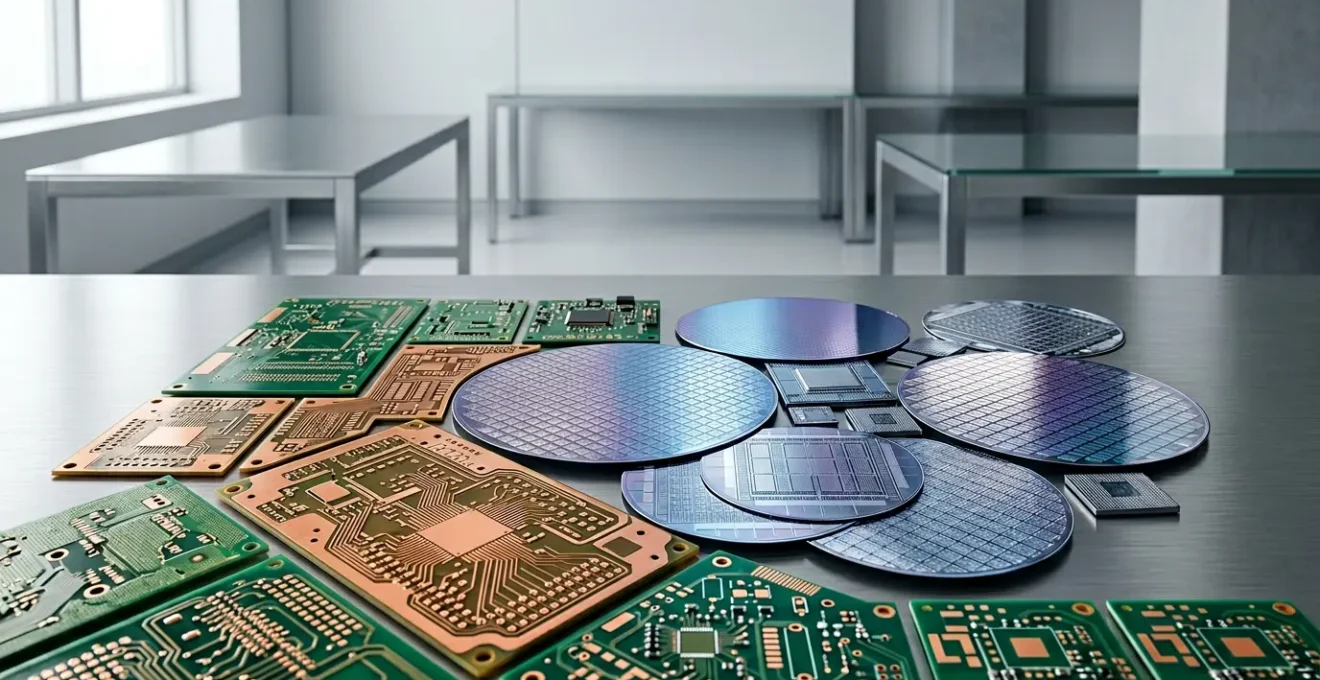
As the image above illustrates, the complexity of these devices is immense. Learning to harness this power involves more than just writing code. It requires a system-level understanding of how to optimize a machine learning model and map it efficiently onto the FPGA’s resources. While traditionally programmed using Hardware Description Languages (HDLs) like Verilog or VHDL, the industry is rapidly moving towards High-Level Synthesis (HLS). HLS allows you to program FPGA logic using languages like C++ or Python, dramatically lowering the barrier to entry and accelerating development.
To start your journey, focus on understanding the core concepts of digital logic and computer architecture. Then, acquire a development board (from manufacturers like Xilinx/AMD or Intel/Altera) and begin working through tutorials. The key is to build practical projects that deploy real AI models. Here are the fundamental steps involved:
- Choose an FPGA that matches your application’s compute, memory, and power requirements, such as a Xilinx Zynq UltraScale+ for high-performance AI or an Intel Stratix 10 for edge computing.
- Optimize your AI model through techniques like quantization (converting floating-point numbers to 8-bit integers), pruning (removing insignificant neural network connections), and compression.
- Learn High-Level Synthesis (HLS) tools like Vitis HLS or Intel HLS Compiler to program FPGAs using C++/Python instead of traditional HDLs.
- Implement partial reconfiguration capabilities, which allow parts of the FPGA to be reprogrammed in real-time for adaptive AI applications.
Analog vs Digital Design: Which Path Has More Job Security?
Within hardware engineering, a fundamental split exists between analog and digital design. Digital design deals with discrete signals—the 1s and 0s that form the basis of all modern computing. It’s a world of logic, state machines, and predictable behavior. Analog design, on the other hand, deals with continuous signals—the messy, real-world phenomena like voltage, current, and frequency. It’s the art of managing noise, impedance, and the physical characteristics of electronic components.
While both fields are essential, the rise of AI is creating a fascinating divergence in their job security outlook. Generative AI tools are becoming increasingly adept at optimizing digital logic. They can explore vast design spaces, generate efficient HDL code, and verify digital circuits with superhuman speed. This means many routine aspects of digital design may become heavily automated. The role of the digital designer will shift towards system architecture and AI tool supervision, rather than manual implementation.
Analog design, however, presents a much greater challenge for AI, creating what many call an “analog moat” of job security. It is often described as a “dark art” because it relies heavily on intuition, experience, and a deep understanding of physics that is difficult to codify into algorithms. As the research team at Cadence, a leading EDA (Electronic Design Automation) company, explains, AI’s strengths align with the digital world, not the continuous and unpredictable nature of analog.
AI excels at optimizing discrete, logical digital systems, but struggles with the ‘dark art’ of analog design, which relies on intuition, experience, and managing continuous physical phenomena.
– Cadence AI analog design research team, AI in Analog Design
Every modern device, from your smartphone to an electric vehicle, needs an analog interface to interact with the real world—power management ICs, RF transceivers, sensors, and data converters are all analog. This demand is constant and growing, yet the pool of true analog experts is small and aging. For a young engineer, specializing in analog design is a powerful strategic move. It is a commitment to mastering a difficult but highly defensible skill that is less susceptible to automation and guarantees you a critical role in the creation of any physical technology.
The Skill Gap That Leaves Senior Engineers Unemployable After 50
The tech industry is notorious for its obsession with youth, but in hardware, the problem isn’t ageism—it’s skill stagnation. There’s a looming crisis where a generation of highly experienced senior engineers is approaching retirement, and a critical gap in tacit knowledge is forming. The challenge is that while their foundational knowledge is priceless, the tools and methodologies have evolved. An engineer who perfected their craft in the 1990s but hasn’t embraced modern verification techniques, scripting languages (like Python), or collaborative design platforms can find themselves unemployable.
This isn’t a story of obsolescence, but of a disconnect. The industry is facing a demographic cliff. According to industry analysis, one-third of the U.S. semiconductor workforce is aged 55 or older. These engineers hold decades of experience in their minds and hands—an intuitive understanding of how to debug a noisy signal on an oscilloscope or why a particular layout failed that cannot be learned from a textbook. This creates a massive opportunity for young engineers, not a threat.
Your role as a young professional is to become a bridge. You bring fluency in modern tools, AI-driven workflows, and agile methodologies. A senior engineer brings decades of tacit knowledge and hard-won wisdom. The most successful teams will be those that pair these generations. By actively seeking mentorship from senior engineers, you can absorb this invaluable experience while helping them integrate modern tools into their workflow. You don’t replace them; you augment them, and in doing so, you inherit their wisdom.
The key takeaway is that your long-term employability hinges on a commitment to continuous evolution. Your degree gives you the foundation, but you must actively build upon it. Learn Python for test automation. Master modern version control systems like Git for hardware projects. Understand the principles of Design for Test (DFT). By doing so, you not only secure your own future but also become a vital link in preserving the institutional knowledge that keeps the entire industry moving forward.
How to Document Hobby Projects to Impress Top Tech Recruiters?
Every aspiring hardware engineer is told to “build a portfolio.” But simply having a collection of hobby projects isn’t enough. In a competitive market, what separates a good candidate from a great one is not just *what* they built, but how well they can articulate *why* they built it that way. Professional-grade documentation is the key to transforming a weekend project into a powerful career asset that genuinely impresses top tech recruiters.
Recruiters and hiring managers are not just looking for technical ability; they are assessing your engineering mindset. Can you make and justify design trade-offs? Can you think systematically about testing and validation? Can you communicate complex technical decisions clearly? A well-documented project on a platform like GitHub or a personal blog is the single best way to prove these skills. It’s your evidence that you think like a professional engineer, not just a hobbyist.
Forget about just posting a picture and your final code. Your documentation should tell a story. It should begin with the problem you set out to solve, walk through your design process, and end with quantifiable results. This narrative demonstrates a structured, methodical approach to problem-solving. It shows that you understand that engineering is a process of disciplined compromise. The following checklist outlines the critical elements your project documentation must include to stand out.
Your Action Plan: Documenting Hardware Projects for Maximum Impact
- State the Problem & Requirements: Clearly define the project’s goal. What problem does it solve? What were the target specifications (e.g., power consumption under 50mW, latency below 10ms)?
- Document Design Trade-Offs: This is the most crucial part. Explain WHY you chose architecture X over Y. For example, document decisions like, “Chose a simpler SPI interface over I2C to achieve a higher data rate, accepting the cost of more pins.”
- Showcase Your Test Strategy: Don’t just show that it works; show *how* you proved it works. Include your testbenches, simulation results (with waveforms!), analysis of corner cases, and a brief description of your debugging process.
- Provide Quantifiable Results: Back up your claims with data. Instead of saying “it’s fast,” say “Achieved 500 MS/s throughput with 20 ns latency while consuming 250mW.” Include screenshots from an oscilloscope, logic analyzer, or simulation as proof.
- Include Schematics and Code: Provide clean, commented schematics (e.g., from KiCad or Altium) and well-structured, commented code (HDL, C++, Python). Use a README file to explain the repository structure and how to build/run the project.
Investing time in this level of documentation pays enormous dividends. It provides concrete talking points for an interview and serves as irrefutable proof of your engineering rigor, discipline, and communication skills—the very qualities that define a top-tier hardware engineer.
Why Using AI-Generated Images Can Get Your Business Sued?
The conversation around AI and legal risks often centers on copyright infringement in creative fields. However, in hardware engineering, the stakes are much higher and the risks are rooted in safety and liability. While generative AI is being explored for creating Hardware Description Language (HDL) code, relying on it for safety-critical applications like automotive, aerospace, or medical devices is a legal minefield. The core issue is a lack of verifiable provenance.
When a human engineer designs a circuit, every decision is (or should be) documented and justifiable. The design choices are traceable to requirements, simulations, and verification tests. In the event of a failure, this traceability is essential for post-mortem analysis and is a cornerstone of legal and regulatory compliance. If a car’s braking system fails due to a bug in its control chip, investigators need to be able to trace the design flaw back to its origin.
AI-generated code breaks this chain of accountability. An AI model trained on a vast dataset of existing code from the internet might produce a functional but opaque design. It cannot explain *why* it made a particular architectural choice. Was the training data it used properly licensed? Did it learn from a flawed or insecure design? This “black box” nature makes it nearly impossible to defend in a liability case, as highlighted by security researchers in the field.
In safety-critical hardware, every design choice must be traceable and verifiable. AI-generated code, lacking clear provenance, could make a product non-compliant and legally indefensible in case of failure.
– ACM security-aware EDA research team, Survey on AI for Security-Aware Electronic Design Automation
For an aspiring hardware engineer, this represents another moat. Your value is not just in producing a design, but in being the human in the loop who can stand behind it, verify it, and take responsibility for it. The role of the engineer is evolving to become the ultimate arbiter of quality and safety, using AI as a powerful tool for exploration but never ceding final authority. Your ability to rigorously verify and validate a design—whether you wrote it or an AI suggested it—is a non-negotiable, high-value skill.
Why Warehouses Can’t Find Workers Even with Higher Wages?
While headlines often focus on AI replacing jobs, the hardware industry is facing the exact opposite problem: a catastrophic talent shortage. Despite the critical importance of semiconductors to the global economy—powering everything from data centers to national defense—companies simply cannot find enough skilled workers. This isn’t a temporary blip; it’s a structural crisis that creates immense opportunity and job security for those with the right skills.
The scale of the problem is staggering. The semiconductor industry is projected to grow massively, driven by AI, 5G, and the electrification of everything. Yet, the pipeline of new talent is drying up. A comprehensive analysis projects that the industry will need more than one million additional skilled workers by 2030 to meet demand. This is happening at the same time that university enrollment in electrical engineering and related fields has been flat or declining in many Western countries.
This creates a classic supply and demand imbalance that works heavily in the favor of skilled engineers. Companies are competing fiercely for a limited pool of talent, which drives up salaries and creates exceptional job security. The fear of being replaced by AI seems abstract when contrasted with the concrete reality of a C-suite executive desperate to fill engineering roles to keep a multi-billion dollar fabrication plant running.
This paradox—a high-tech industry struggling to find workers—is your single greatest source of leverage. It means that if you invest in a hardware engineering degree and cultivate the specialized skills the industry needs (like analog design, verification, or packaging), you will not be looking for a job. Jobs will be looking for you. You are entering a seller’s market, where your expertise is a scarce and precious resource. Your career will not be defined by a fear of obsolescence, but by the challenge of choosing from a wealth of opportunities.
Key Takeaways
- A hardware degree’s true value is in physical-world problem-solving, a skill AI augments but cannot replace, unlike more commoditized software tasks.
- Strategic specialization in AI-resistant niches like analog design or system-level skills (FPGAs) is the key to building a defensible, high-value career.
- A massive and growing talent shortage in the semiconductor industry creates exceptional long-term job security and negotiating power for skilled engineers.
Will Generative AI Replace Graphic Designers by 2026?
So, we arrive at the final, overarching question: will generative AI replace the hardware engineer? The answer is an emphatic no. AI will not replace the engineer; it will replace the engineer’s tedious tasks, becoming the most powerful co-pilot in the history of the field. It will augment, not automate away, the core of the profession.
Generative AI can produce synthesizable code, suggest architectural improvements, and check for basic errors. This is incredibly valuable. It can free an engineer from the drudgery of writing boilerplate code or running routine simulations, allowing them to focus on higher-level challenges. But AI operates in a world of digital abstraction. It does not understand the physical world. As research from hardware engineering experts at CoLab points out, the real work often begins where the code ends.
AI can generate code, but it cannot debug a signal integrity issue on a physical PCB or navigate the immense financial and political risk of a multi-million dollar tape-out.
– CoLab hardware engineering research
This is the essence of your future role. You are the master of the physical domain. You are the one who can form a hypothesis, use an oscilloscope to track down a nanosecond-timing glitch, understand the subtle effects of temperature on a component’s performance, and make the final, high-stakes call on a chip’s release. This is physical-world problem-solving, and it is a deeply human skill combining theoretical knowledge, practical experience, and intuition.
A hardware engineering degree is more valuable than ever because it provides the fundamental scientific and mathematical foundation to understand *why* things work at the atomic level. Your career will be defined by your ability to leverage AI as a tool to solve these complex, real-world problems more effectively. You will guide the AI, question its outputs, and, most importantly, own the verification and validation of the final, physical product. The degree is not a ticket to a job; it’s the beginning of your training as a master of the physical-digital interface.
Embrace the challenge. Your journey is not about out-running a machine; it is about learning to pilot it. By focusing on the irreplaceable skills of system-level thinking and physical-world problem-solving, you can build a career that is not only secure but also deeply rewarding and central to creating the future of technology.